
BOOKS BY PAVEL GAZUR
Two Novels of Big Sur
Historical fiction inspired by the California coast I have painted for years.
For years I returned to Point Sur, Garrapata, Kirk Creek, Partington Cove and the beaches and cliffs along Highway 1 with an easel. Eventually I began discovering the history behind these places, and some of those stories became books.
The Light at Point Sur: A Historical Novel, begins with the real loss of the USS Macon off Point Sur in 1935 and follows a fictional love story set along the Big Sur coast.
Partington Cove: A Novel of Big Sur begins several years earlier, in 1928, with the discovery of jade and follows the consequences of one family's choices across generations.
Both books are available now in paperback and Kindle editions.
The Light at Point Sur: A love that began in a rescue tent on a Big Sur beach, lost to silence and bad timing, and returned to the same coast half a century later.
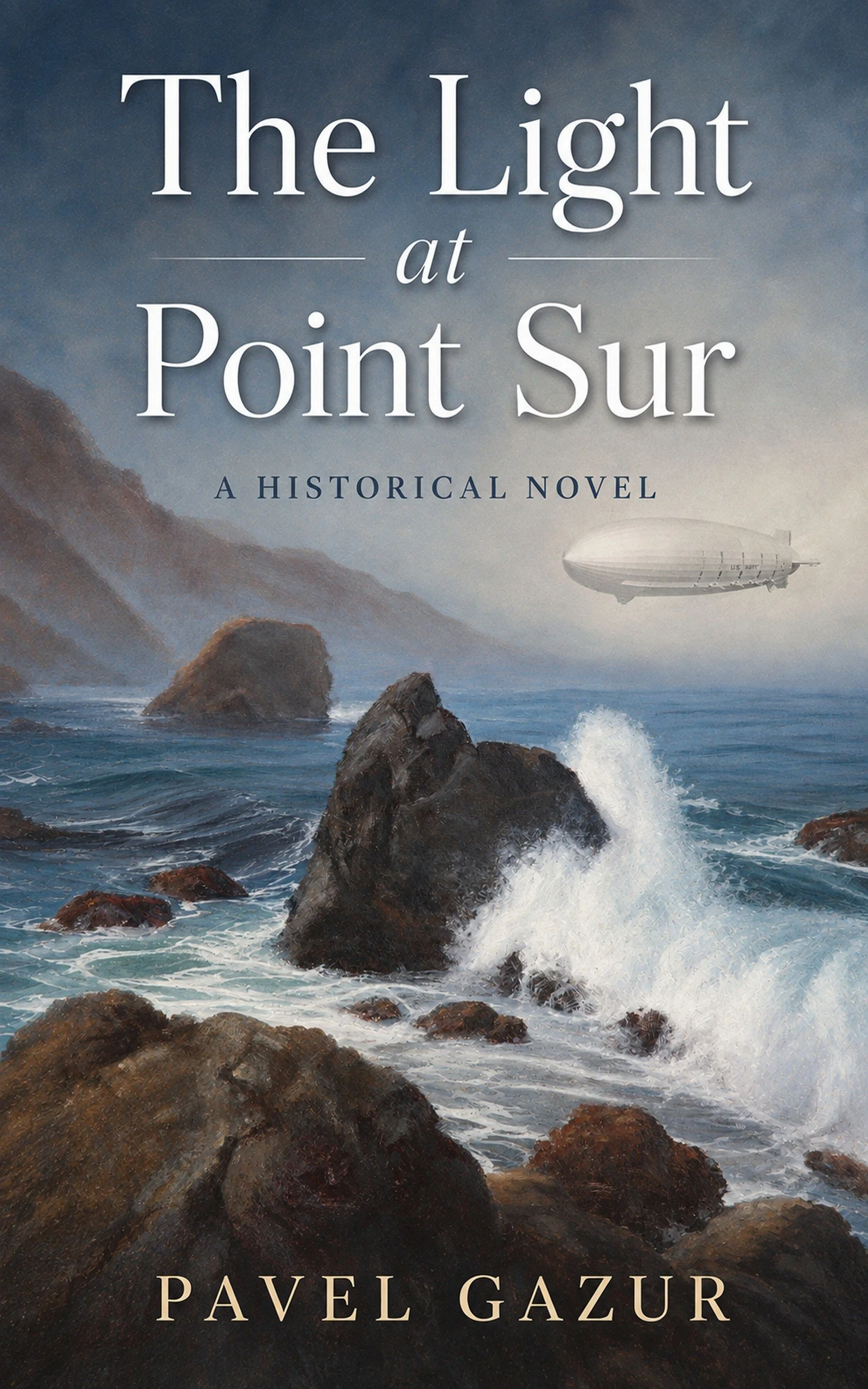
THE LIGHT AT POINT SUR: A HISTORICAL NOVEL
In 1935, a Navy airship nearly 800 feet long fell into the Pacific off Point Sur.
It really happened. Almost no one remembers.
On February 12, 1935, Esther Jameson watches the USS Macon come down off the coast below her family's lighthouse. By morning, survivors have been brought ashore and a young Navy radioman named Clyde Carter finds himself alive when he had been certain the sea had decided otherwise.
What begins between Esther and Clyde carries them through Point Sur, Garrapata, Pfeiffer Beach and the changing Big Sur coast, then through separation, silence and decades in which each believes the other has moved on.
The disaster is real. Esther and Clyde are fictional.
This is the shorter of my two Big Sur books and a good book to read before a trip down Highway 1, or to bring with you while visiting the places where the story takes place.
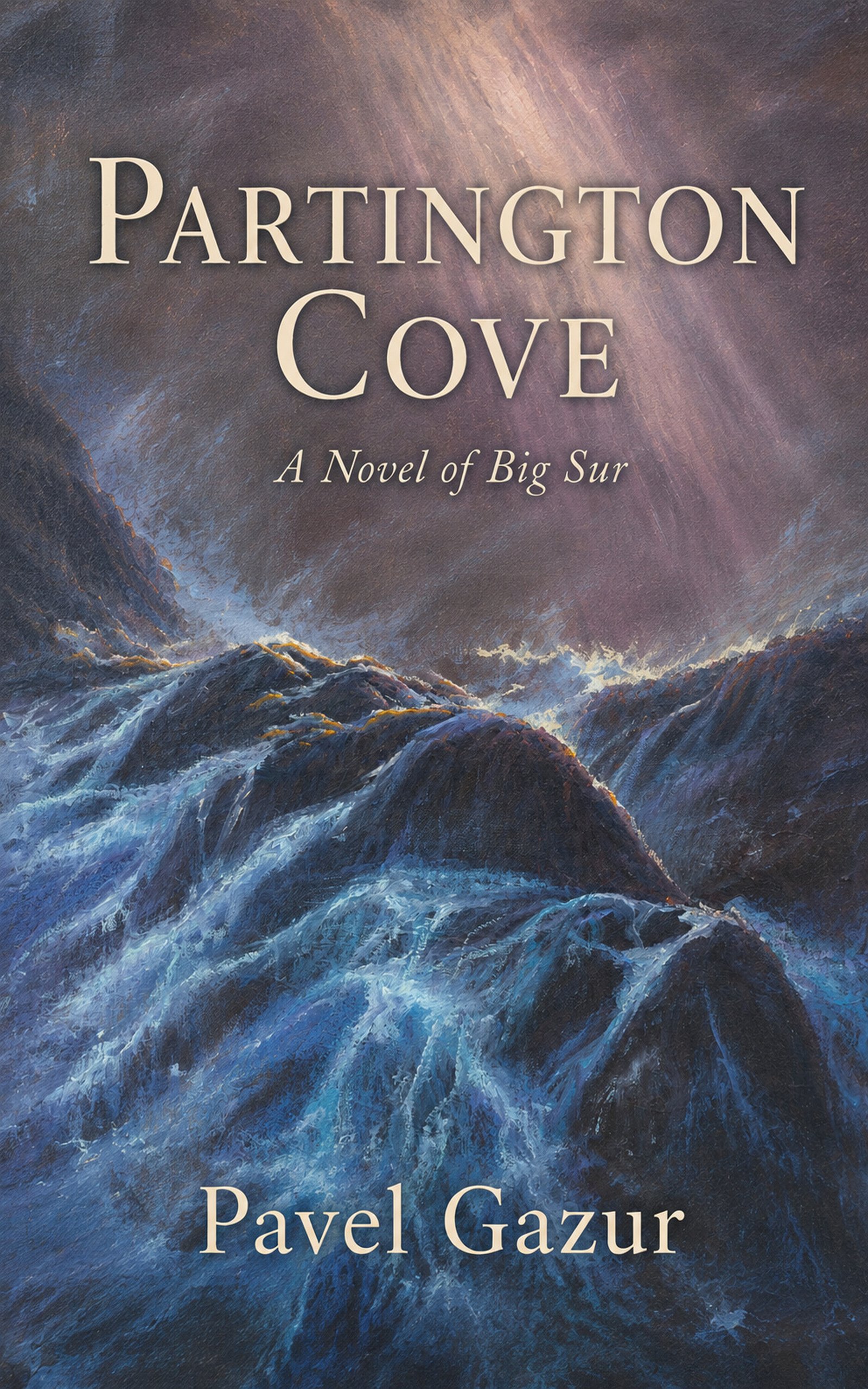
PARTINGTON COVE: A NOVEL OF BIG SUR
Big Sur, 1928.
When Ingrid Halvorsen discovers jade along the remote California coast, what begins as an extraordinary find soon becomes something much larger.
The discovery brings opportunity, ambition and conflict to a family living along a coast that was still difficult to reach and largely cut off from the rest of California. Ingrid and Samuel Hale are eventually forced to make a decision at Partington Cove that will shape their family long after they are gone.
More than sixty years later, Jonathan Hale begins looking into the history of the family business he inherited. With historian Claire Sutton, he follows a trail back through Monterey, Jade Cove, Partington Cove and the isolated communities of early Big Sur, gradually uncovering the choices on which his family's success was built.
Partington Cove is the longer of the two books, a historical novel about family, ambition, love, inheritance and the stories families choose to preserve.

Why I Write About Big Sur
I came for the cliffs, the fog, the ocean and the changing light. I have stood with an easel at Garrapata, Kirk Creek, Plaskett Creek, Partington Cove, Point Sur and many of the other places that eventually found their way into these books.
Painting a place makes you pay attention to it. You begin wondering what happened there before you arrived.
That curiosity led me to the story of the USS Macon and eventually to The Light at Point Sur. It also led me further into the history of the coast, the people who lived here before Highway 1 connected everything, the jade found along the southern Big Sur shoreline, and the isolated coves and landings that once connected these communities to the outside world.
Those discoveries became Partington Cove.
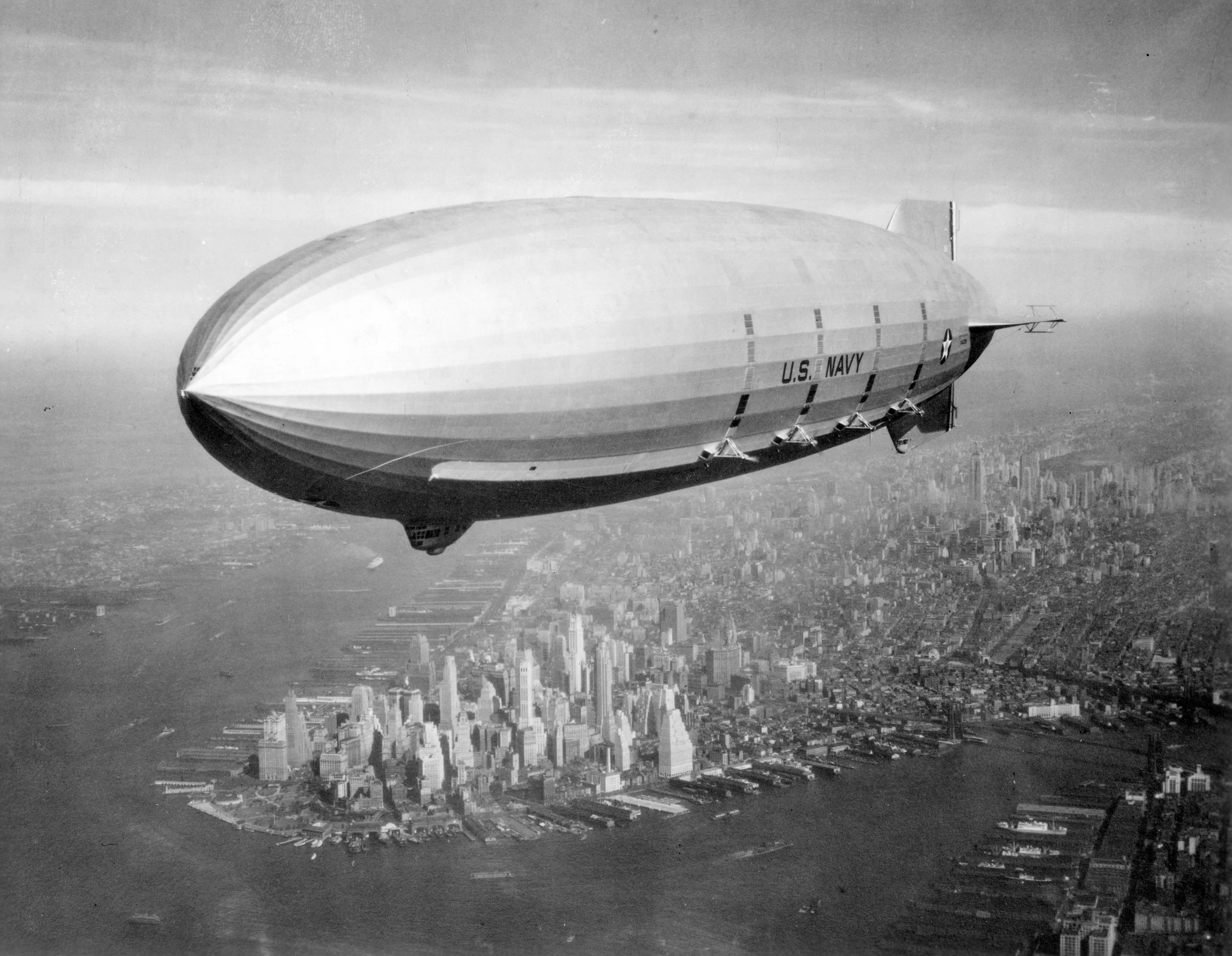
USS Macon over Manhattan, 1933 — nearly 800 feet of airship above the city. U.S. Navy photograph.
THE REAL HISTORY BEHIND THE LIGHT AT POINT SUR
USS Macon (ZRS-5) was a rigid airship nearly 800 feet long, a flying aircraft carrier that launched its own fighter planes, and one of the largest flying machines ever built. On February 12, 1935, in worsening weather off Point Sur, a gust tore away her upper fin and she settled tail-first into the Pacific over about twenty minutes. Because she carried life rafts, all but two of the men aboard were saved. The two who were lost, Radioman First Class Ernest Edwin Dailey and Mess Attendant First Class Florentino Edquiba, were real men, and they are remembered here. The wreck still rests in deep water off Point Sur, where it was rediscovered decades later. Everything else in the story is fiction.

PARTINGTON COVE ON THE BIG SUR COAST
Partington Cove, circa 1903. California Views / Pat Hathaway Archives.
Before Highway 1, the Big Sur coast faced the sea, and almost everything that left it went by ship. This photograph shows how. A schooner is moored tight against the rocks of Partington Cove, and a wooden boom swings cargo down from the landing to her deck.
John Partington settled here in 1874 and built this landing to ship tanbark, the bark of the tanoak that was used to tan leather, along with timber from the canyon. To reach the water, he cut a tunnel through the rock promontory. The tunnel still stands, and the bolts and footings of the landing can still be found in the rock. In the Prohibition years the cove was said to be a landing place for bootleggers, though that part of its history comes mostly from local legend.
This is the cove at the heart of Partington Cove. The landing, the tunnel, and the isolation of that coast are real. The Halvorsen and Hale families, the jade, and what happens here in 1928 are fiction.
SELECTED WORK
The Big Sur Collection
Before these places became settings in my books, many of them became paintings.
Point Sur, Garrapata, Kirk Creek, Plaskett Creek, Pfeiffer Beach, Partington Cove and the surrounding coastline continue to be some of the places I return to most often with an easel.

Kirk Creek, Big Sur, California | Painting by Pavel Gazur

Garrapata Beach, Big Sur, California | Painting by Pavel Gazur
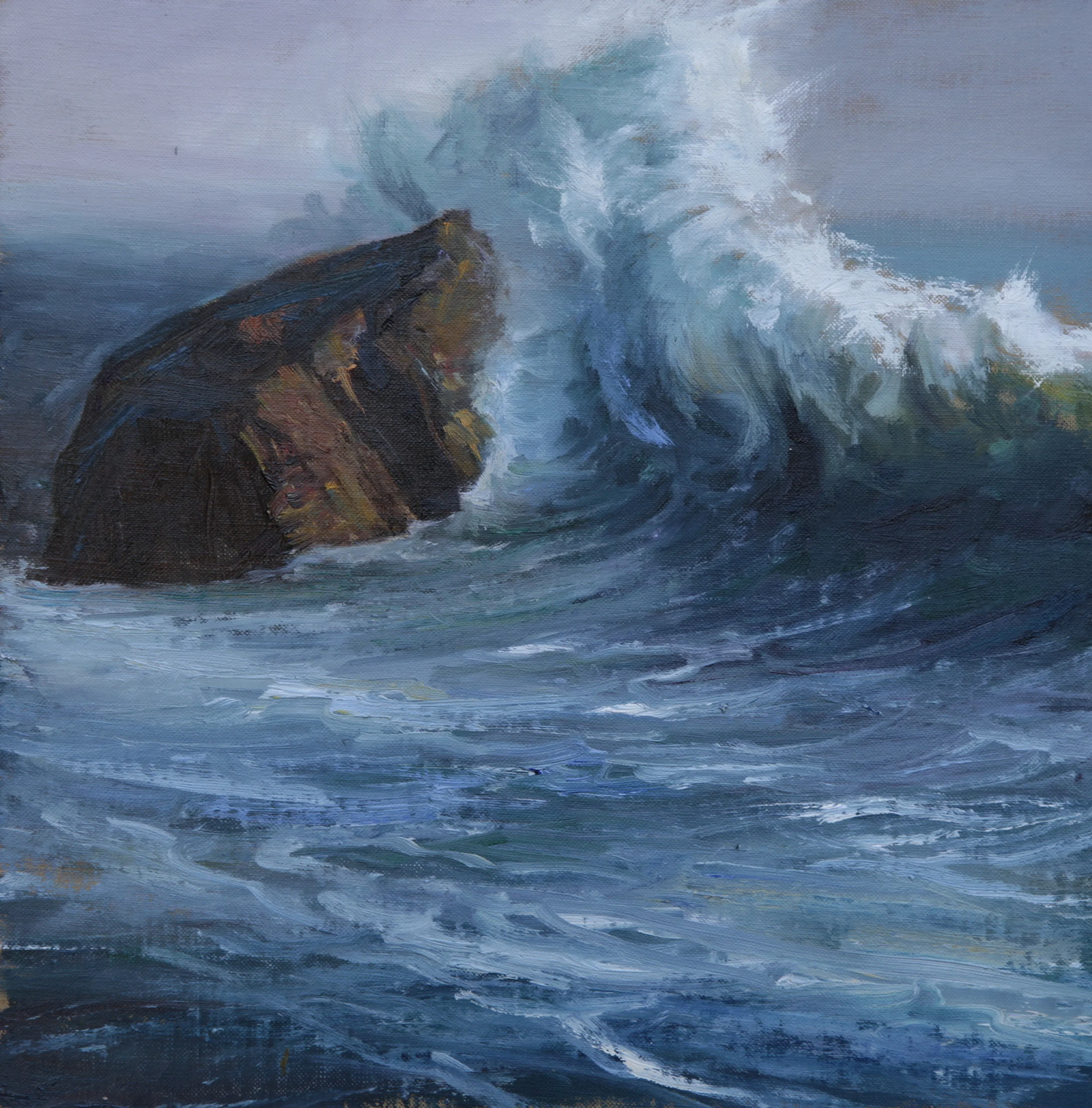
Kirk Creek, Big Sur, California | Painting by Pavel Gazur

Plaskett Creek, Big Sur, California | Painting by Pavel Gazur

Kirk Creek, Big Sur, California | Painting by Pavel Gazur
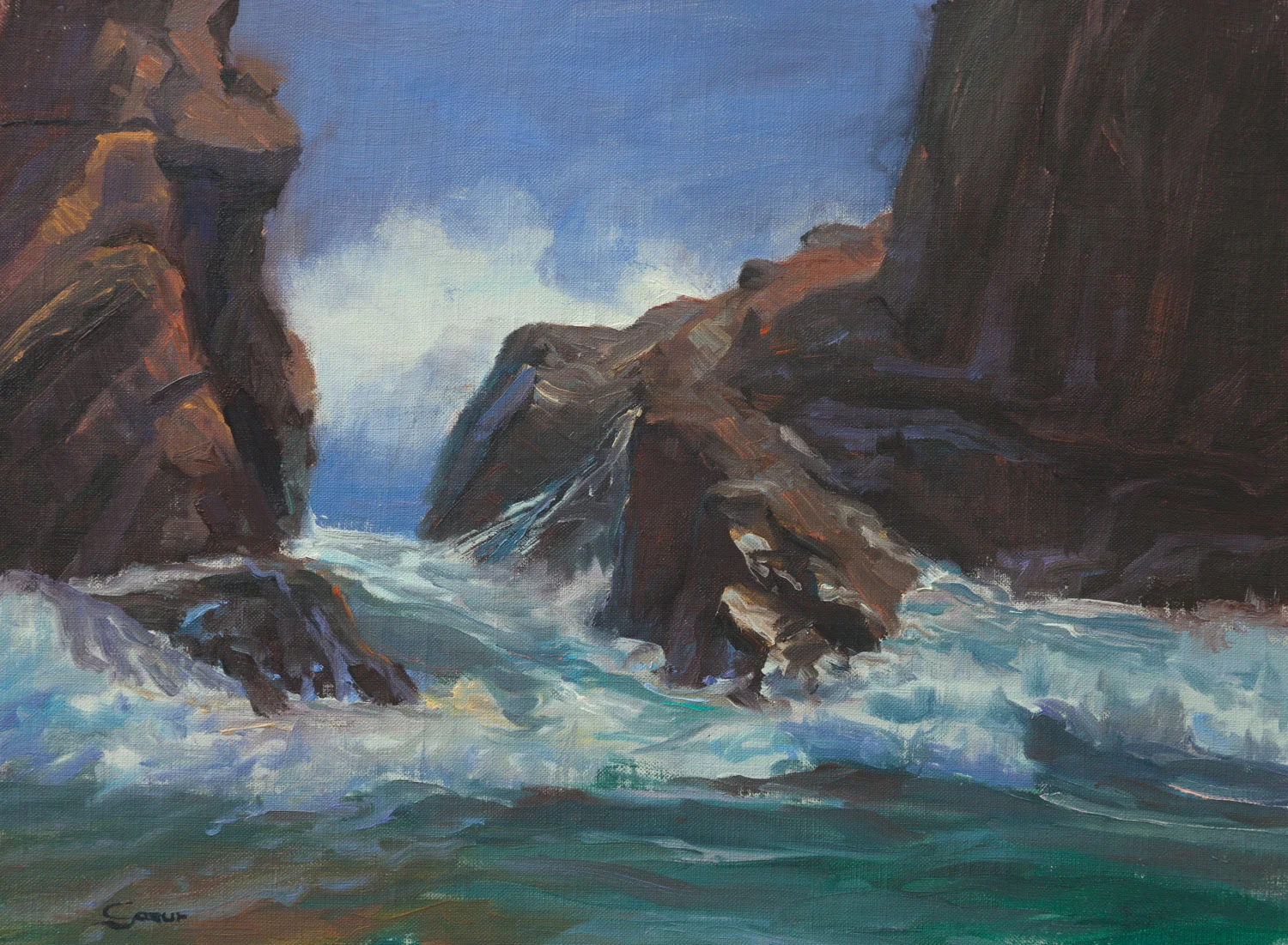
Pfeiffer Beach, Big Sur, California | Painting by Pavel Gazur
Visit the Coast Behind the Book
ABOUT BIG SUR
If this story or my paintings make you want to see Big Sur, go.
Take the book with you. Visit Point Sur. Walk Garrapata Beach. Look out from Kirk Creek — better yet, reserve a spot and camp the night. Find the fog, the cliffs, the wind, the waves below the bluffs. And if you stay over, look up: the stars out there are something you'll carry with you.
If you are planning a trip follow the link below, how to get there, where to eat and stay, places to visit and few tips.