Big Sur Travel Guide: Best Places to Visit, Beaches & Scenic Stops
I have been painting and exploring Big Sur for years. I have stood with my easel on its bluffs, surfed its waves, camped above the Pacific, and traveled Highway 1 many times with my wife and daughter.
My wife, Siobhan, and I loved this coast so much that we got married at Garrapata Beach.
Big Sur is one of California's greatest treasures. It is also rugged country. The cliffs are steep, the ocean can be violent, the fog moves without warning, and the road demands your attention.
This is my personal Big Sur travel guide. It covers the beaches, coastal viewpoints, hikes, campgrounds, and places to stop that I know and love, along with practical advice learned from years of painting the California coast.
If you are visiting Big Sur for the first time, I hope this guide helps you see more than the familiar viewpoints. Take your time. Get out of the car. Walk the coast. Watch the light change.
That is how I came to love this place.

Pavel Gazur painting in Kirk Creek, Big Sur | Painter of Big Sur - California Seascape Original Paintings
Where Is Big Sur, California?
Big Sur stretches along California's central coast, roughly between Carmel-by-the-Sea to the north and the San Simeon area to the south.
Highway 1 follows approximately 90 miles of rugged coastline, with the Santa Lucia Mountains rising on one side and the Pacific Ocean dropping away on the other.
It is one of the most remarkable coastal drives in America.
You can see some of Big Sur in one day, but I recommend allowing at least two or three days. There is simply too much here to enjoy while rushing from one turnout to another.
Carmel and Cambria make good bases for exploring the northern and southern sections. The Big Sur River valley offers places to stay closer to the middle.
My advice is simple: plan fewer stops and spend more time at each one.
Before You Go: Highway 1 Road Conditions and Safety
Always check road conditions before driving Big Sur.
Landslides, fires, storms, and road repairs can affect Highway 1 and access to state parks. Do not assume you can drive the entire route from Carmel to Cambria without checking.
Check these official resources:
Caltrans QuickMap for road conditions and closures
California State Parks for park and trail closures
Big Sur Chamber of Commerce for local visitor information
Travel advisory, October 2026: Recent wildfires have affected several Big Sur state parks. Some areas are reopening while certain trails remain closed. Confirm access before traveling.
What I Have Learned Driving and Painting Big Sur
Watch the road. Highway 1 is narrow, winding, and full of people distracted by the scenery. Some drivers stop suddenly or make dangerous turns to reach a viewpoint. Watch for cyclists too.
Stay away from cliff edges. I have spent years painting near these bluffs. The ground can be loose and undercut. Never trust an edge simply because it looks solid.
Respect the ocean. I have surfed Big Sur many times, and the waves can be extraordinary. They can also be dangerous. Sneaker waves, strong currents, and changing tides make some beaches unsafe for swimming or climbing on rocks. Never turn your back on the surf.
Bring warm clothing. Even in summer, the wind and fog can make the coast surprisingly cold.
Fill your gas tank. Fuel is available at only a few locations along the central coast, and prices can be high.
Download your maps. Cell coverage is unreliable across much of Big Sur.
Watch for poison oak and ticks. Wear proper shoes and stay on established trails. I have seen too many visitors walking into brush wearing shorts and flip-flops.
Bring water and first-aid supplies. Some places are remote and emergency help may take time to reach you.
Big Sur is beautiful, but it deserves respect.
Best Places to Visit in Big Sur
I have arranged these stops roughly from south to north, beginning near Cambria and ending around Carmel.
You can explore in either direction, depending on where you are coming from and which sections of Highway 1 are accessible.
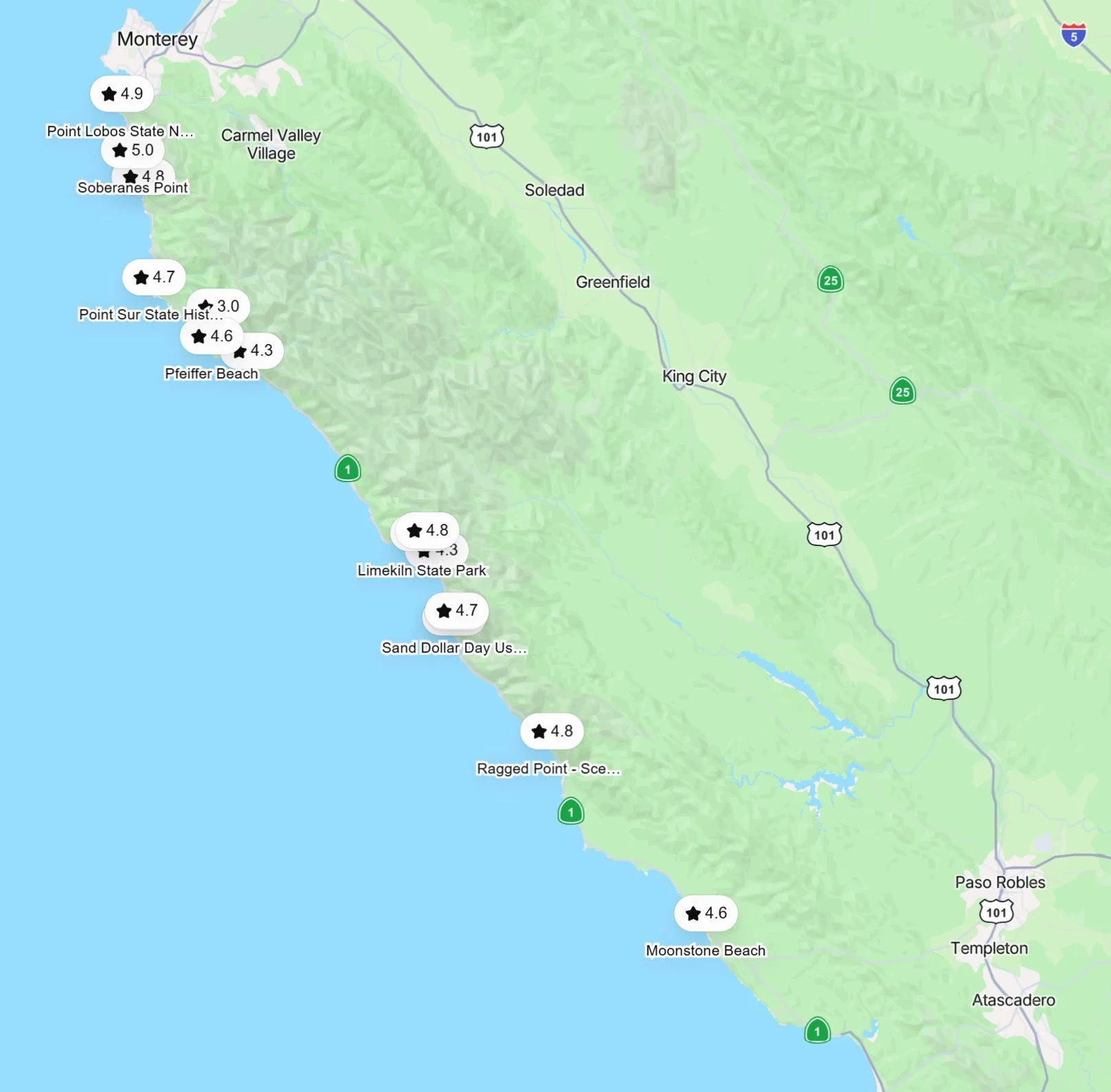
1. Cambria and Moonstone Beach
Cambria is one of my favorite places to begin a Big Sur trip.
It has good restaurants, small shops, and places to stay along Moonstone Beach Drive. My family has stopped here many times to pick up supplies before heading north.
I recommend walking the Moonstone Beach boardwalk. The coastline is beautiful, especially in the morning and late afternoon when the low light brings out the shapes of the rocks.
We have enjoyed Linn's Restaurant over the years, and Cookie Crock Market has been a useful stop for camping supplies and food.
If you want to stay overnight before driving into Big Sur, Cambria is a good choice.
Best for: Coastal walks, lodging, food, photography, and painting.
2. Ragged Point
Ragged Point is one of the first places where the southern Big Sur coast begins to show its real character.
The cliffs rise high above the Pacific, and the views stretch along the mountains and shoreline.
Stop at the viewpoint, walk around, and give yourself time to look at the coast.
I have always found this area inspiring for paintings because you are looking down at the ocean from above. The waves create patterns against the rocks that are difficult to appreciate from beach level.
There are also places to get food and take a break before continuing north.
Best for: Scenic views, photography, and a break along Highway 1.
3. Jade Cove and Plaskett Creek
This is one of the wildest sections of the southern Big Sur coast.
Jade Cove is known for the jade found along this stretch of shoreline, but the coast itself is what interests me most. Rocky coves, steep terrain, and waves striking the cliffs make it unlike the more accessible beaches farther north.
Access to Jade Cove can be difficult and dangerous. Do not attempt the descent unless the trail, weather, and surf conditions are suitable for your abilities. Jade collecting is regulated, so check current sanctuary rules rather than assuming stones can be removed.
Nearby, Plaskett Creek Campground provides a base for exploring the area, while Sand Dollar Beach offers one of the broader beaches along southern Big Sur.
The area has influenced my paintings for years and later helped inspire my novel Partington Cove: A Novel of Big Sur, which begins in 1928 and draws on the history and landscape around Jade Cove, Partington Cove, and Monterey.
Best for: Rugged coastal scenery, camping, photography, and exploring Big Sur's lesser-known history.
4. Sand Dollar Beach
Sand Dollar Beach is one of the more accessible large beaches in southern Big Sur.
It is a good place to walk, watch the waves, and spend time near the ocean without feeling that you have to keep driving to the next viewpoint.
For painters, the wide beach and surrounding cliffs create interesting contrasts. The color of the water changes constantly with the sky.
The surf can be powerful, so check the conditions and stay away from dangerous water.
Best for: Beach walks, coastal views, and landscape painting.
5. Kirk Creek
Kirk Creek is one of the places that keeps bringing me back.
The campground sits on a bluff overlooking the Pacific. From here you can watch long lines of swell move toward shore and break against the rocks below.
I have painted this stretch of coastline many times.
The changing light is what interests me most. You can begin with calm blue water and find yourself looking at an entirely different ocean an hour later.
If you enjoy camping, Kirk Creek is a remarkable place to spend a night. Bring your own drinking water, confirm campground facilities, and reserve ahead.
Kirk Creek also became important in my writing. It is where my historical novel The Light at Point Sur begins, with a painter at his easel overlooking the coast.
Best for: Camping, sunset and morning views, painting, and quiet time above the Pacific.
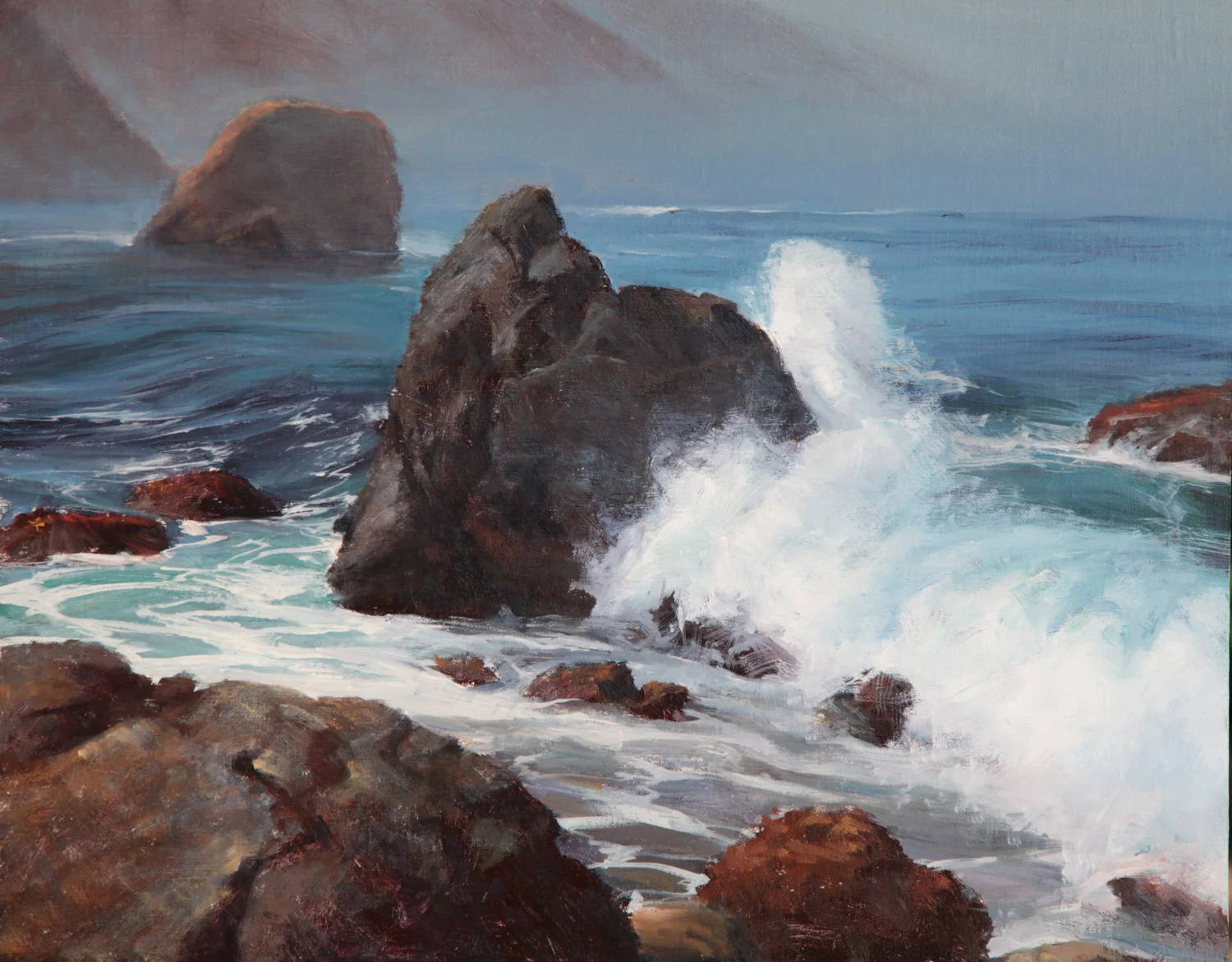
Big Sur Morning — Original 16 x 20 in. (40.64 cm x 50.8 cm) oil on linen painting of waves breaking around dark coastal rocks along the Big Sur coast in California. White surf, blue Pacific water, and rugged rock forms capture the movement and force of the Central Coast.
This painting is part of Pavel Gazur’s California Coast series, where Big Sur is a central subject and a recurring source of inspiration.
Available original painting.
6. Limekiln State Park
Limekiln is a different side of Big Sur.
Here the coastline meets a steep canyon with redwoods, streams, and the remains of historic limekilns.
I have always liked the contrast between the dark forest and the open Pacific.
Because parts of the park and its trails have experienced closures, check the official California State Parks page before visiting. Do not assume every trail or campground facility is available.
Best for: Coastal forest scenery, nature, and accessible areas when open.
7. Partington Cove
Partington Cove is one of my favorite places to explore along Highway 1.
A steep trail leads down from the highway into a canyon. A bridge and historic tunnel take you toward the rocky cove, where the ocean meets the cliffs.
It is a short outing compared with some Big Sur hikes, but the return climb takes effort.
What I like about this place is that you cannot appreciate it from the highway. You have to get out and walk down.
The tunnel, the rocks, and the hidden shoreline give the area a different character from Big Sur's open beaches.
Partington Cove later became one of the places behind my second novel, Partington Cove: A Novel of Big Sur.
Check the current trail status at Julia Pfeiffer Burns State Park before attempting the hike.
Best for: A short coastal hike, photography, history, and exploring a hidden cove.
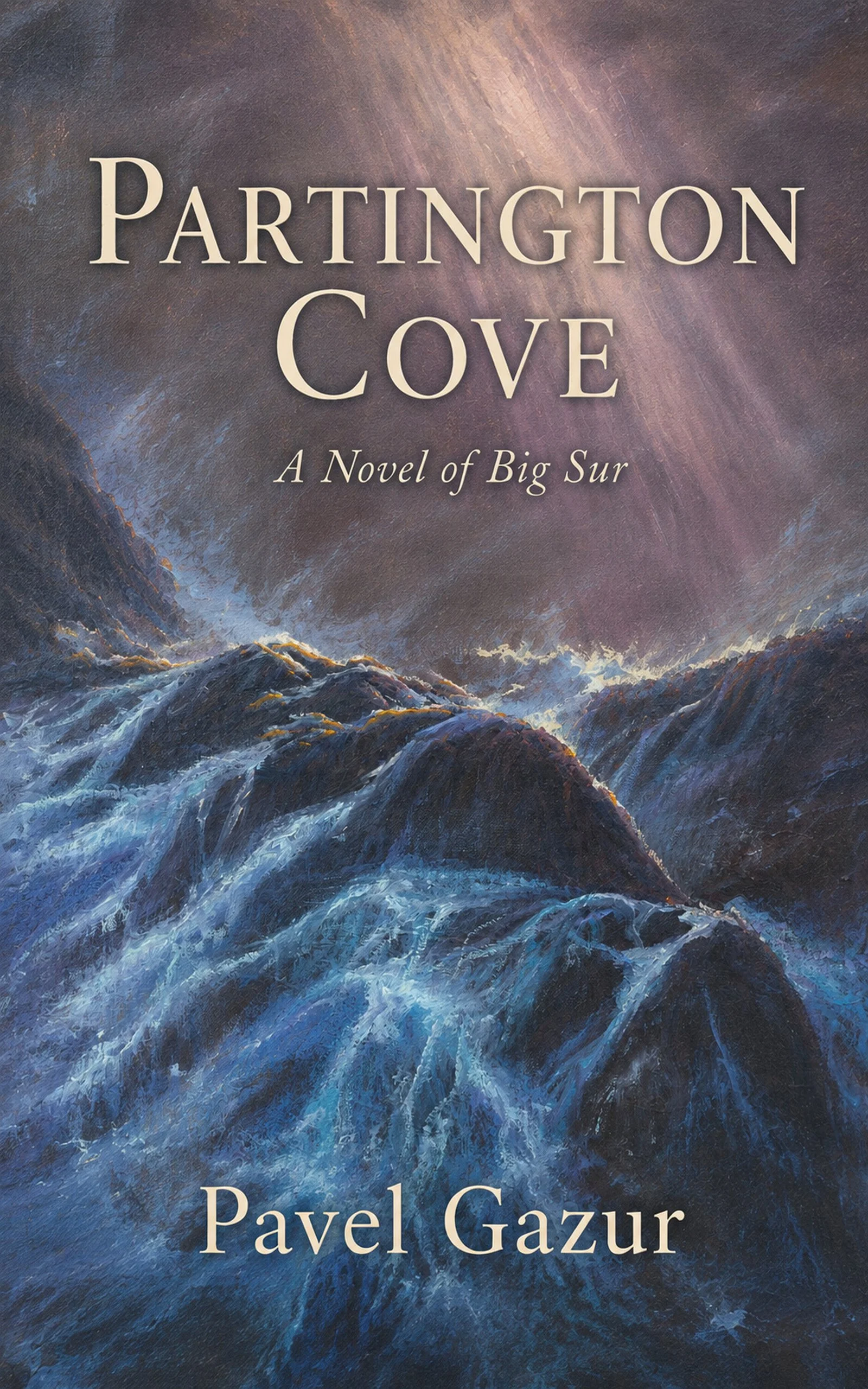
Partington Cove: A Novel of Big Sur
Exploring and painting the rugged Big Sur coastline inspired me to imagine the lives of people who called this remote coast home nearly a century ago.
In 1928, Ingrid Halvorsen discovers jade along the shore below her family's land. What begins as a private discovery becomes a story of family, secrets, inheritance, and the price of keeping the truth hidden.
Set between Jade Cove, Partington Cove, and Monterey, Partington Cove brings together the places I have spent years exploring and the history I have come to love.
8. Big Sur Village and Nepenthe
Central Big Sur is where you will find several restaurants, inns, stores, and places to stop.
The landscape changes here. The road moves among the redwoods and through the Big Sur River valley before returning to the open coastal cliffs.
One of the best-known places is Nepenthe.
The restaurant sits high above the Pacific, with an extraordinary view of the coastline. It is a good place to stop for a meal and take in the scenery.
I particularly enjoy places like this after spending hours painting outdoors. You can sit down, warm up, and watch the changing light over the water.
Big Sur River Inn is another useful stop for visitors looking for food, lodging, or supplies.
Best for: Restaurants, lodging, refreshments, and coastal views.
9. Pfeiffer Beach
Pfeiffer Beach is one of the most beautiful places on the Big Sur coast.
The beach is known for its large rock formations, the opening through Keyhole Arch, and patches of sand that sometimes appear purple.
The first time you stand on this beach, it is difficult not to stop and simply look.
I especially like the late afternoon light. In winter, photographers often come to capture the sun shining through the arch when conditions are right.
Access is by Sycamore Canyon Road, a narrow road off Highway 1. It is not suitable for large RVs or trailers, and parking is limited. Pfeiffer Beach is separate from Pfeiffer Big Sur State Park.
Be prepared for wind and cold, even on a sunny day.
Best for: Sunset photography, beach scenery, dramatic rock formations, and painting.
10. Point Sur Lighthouse
Point Sur is one of the most remarkable places on this coast.
The lighthouse stands on a volcanic rock rising above the Pacific. From the highway, it looks isolated, exposed, and almost impossible.
I have always been fascinated by the lighthouse and the lives of the people who maintained it.
Then I learned about the USS Macon.
On February 12, 1935, the great Navy airship, nearly 800 feet long, was lost in the Pacific off Point Sur. Two crewmen died in the disaster.
That history stayed with me. I had painted the coast for years without realizing what had happened just offshore.
It eventually became the historical foundation for The Light at Point Sur: A Historical Novel.
The lighthouse can be visited through organized tours when available. Check Point Sur Lightstation for current tour information.
If you enjoy California history, this is one of the most interesting stops in Big Sur.
Best for: History, coastal scenery, lighthouse tours, and the story of the USS Macon.
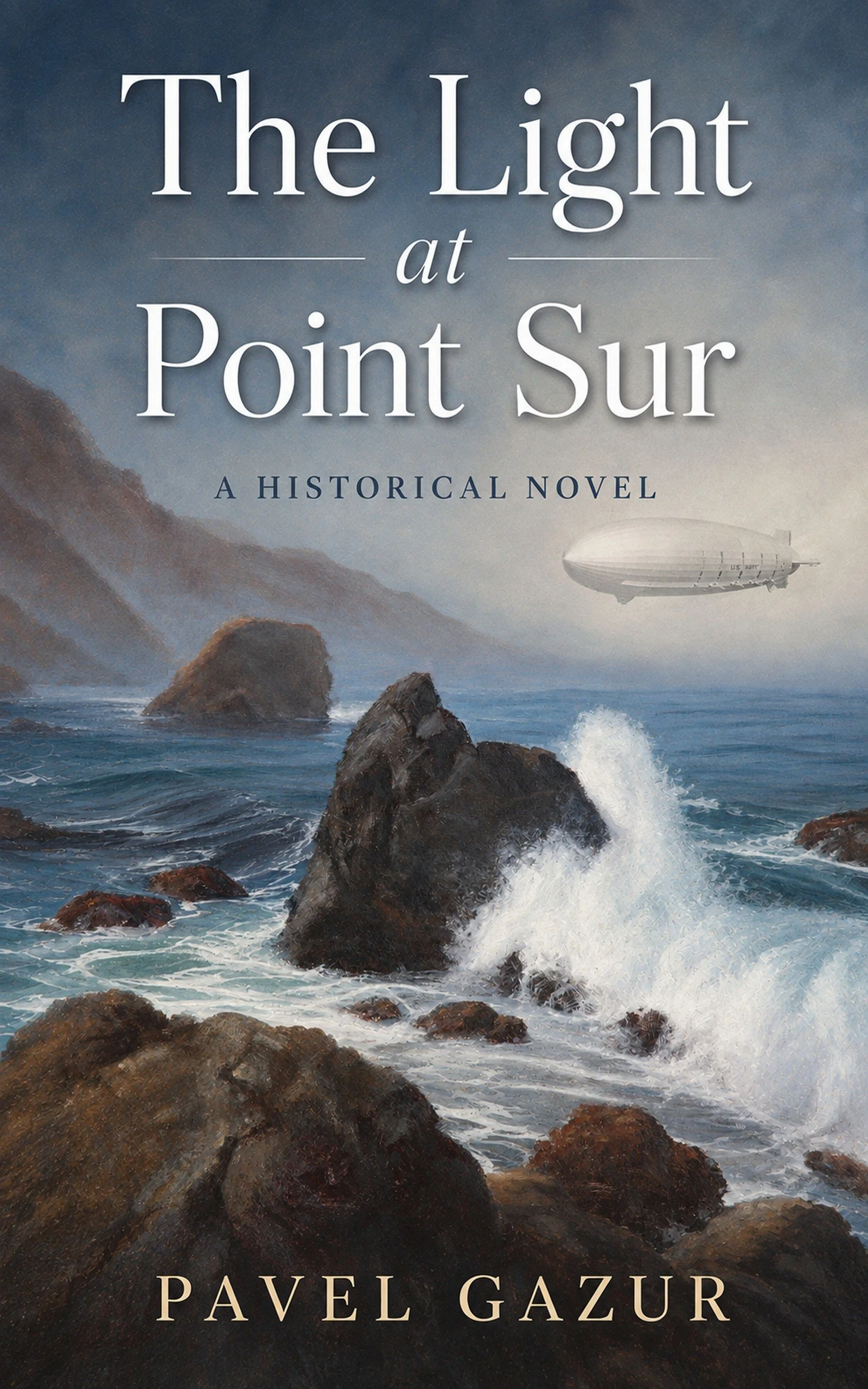
The Light at Point Sur: A Historical Novel
I have painted the rugged Big Sur coastline for years, but discovering the story of the USS Macon, a Navy airship nearly 800 feet long that crashed into the Pacific off Point Sur in 1935, gave me a new fascination with this coast.
That real disaster inspired The Light at Point Sur, a historical novel about Clyde Carter, a young Navy radioman who survives the crash, and Esther Jameson, a lighthouse keeper's daughter. Their love begins on the Big Sur coast, but distance, lost letters, and fifty years of separation change their lives.
The novel brings together my love of Big Sur, my paintings, the history of Point Sur, and years of exploring this remarkable coast with my wife and daughter.
11. Garrapata State Beach
Garrapata is personal for me.
My wife, Siobhan, and I were married here on September 29, 2013.
We had explored Big Sur together for years, and when we decided to marry, Garrapata was the place that felt right.
The beach lies below broad bluffs, with the Pacific breaking against the sand and rocks.
It is beautiful in the late afternoon, especially when the light begins to soften.
I have returned here many times to paint. I never see exactly the same coast twice.
Garrapata also found its way into The Light at Point Sur. The love story in the book is fiction, but my connection to this beach is real.
You can read more about our wedding in my article Wedding in Big Sur.
Best for: Coastal walks, photography, sunsets, painting, and one of my favorite personal places in Big Sur.
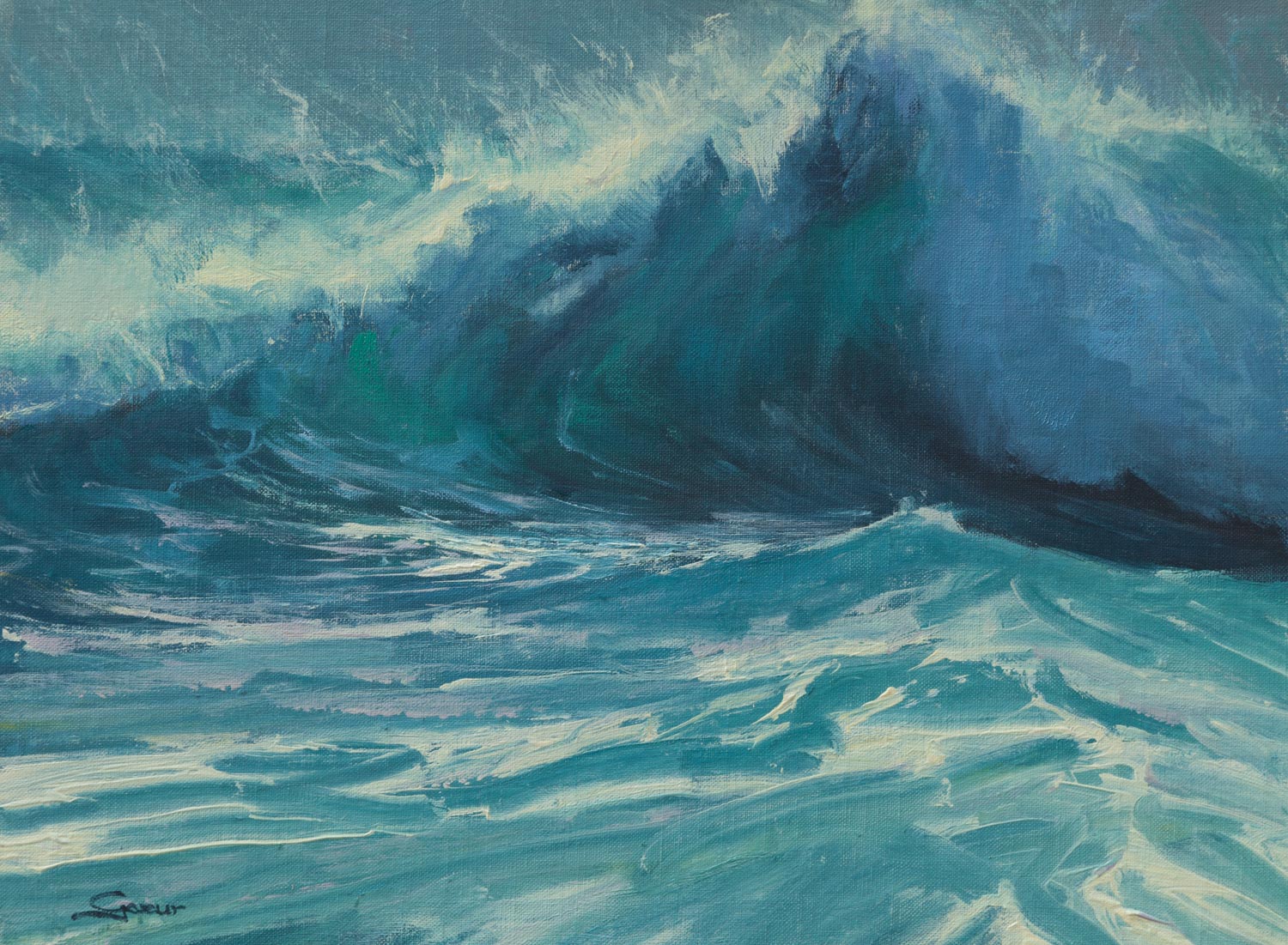
Soberanes Point Wave, Big Sur — Original 12 x 16 in. (30.5 cm x 40.6 cm) oil on linen painting of a breaking wave at Soberanes Point in Big Sur, California. Deep blue-green water, white spray, and shifting ocean light capture the force and movement of the Central Coast.
This painting is part of Pavel Gazur’s California Coast series, where Big Sur is a central subject and a recurring source of inspiration.
Available original painting. Unframed.
12. Soberanes Point
Soberanes Point is another place I recommend for people who enjoy walking and looking closely at the coast.
The coastal trails offer views of cliffs, waves, rocky headlands, and open water.
For painting, I especially like the contrast between the white surf and the darker rocks.
Stay on designated trails and be careful around exposed areas. Some slopes can be steep, and poison oak grows in the area.
Best for: Coastal trails, photography, and plein-air painting.
13. Point Lobos State Natural Reserve
Point Lobos is near the northern end of this trip, just south of Carmel.
It is one of the most rewarding places on the California coast for anyone interested in painting or photography.
The shoreline is full of small coves, rocky points, cypress trees, and changing light.
China Cove and the surrounding coastal trails are particularly beautiful.
Give yourself time to walk rather than simply stopping for photographs.
Parking is limited and the reserve has strict rules to protect its natural environment. Stay on marked paths and respect wildlife.
Best for: Coastal hikes, wildlife, photography, and seascape painting.
Best Time to Visit Big Sur
I paint Big Sur throughout the year because every season gives me something different.
Spring: Green hillsides, changing weather, and strong contrasts between the mountains and sea.
Summer: Foggy mornings, cool coastal air, and busy beaches and campgrounds.
Fall: Often clearer light, beautiful late afternoons, and a quieter feeling after the busiest summer travel.
Winter: Powerful surf, dramatic weather, and some of the most interesting light for painting. Storms can also bring dangerous conditions and road closures.
I personally enjoy the changing weather. A perfectly clear day can be beautiful, but fog moving through the cliffs can make a painting far more interesting.
How Many Days Should You Spend in Big Sur?
One day: Choose a few accessible stops rather than attempting the entire coast. For example, travelers approaching from Carmel might focus on Point Lobos, Garrapata, Point Sur, and one additional stop, depending on access.
Two days: Explore one section of the coast each day and make time for a longer walk, a lighthouse tour, or an evening near the ocean.
Three days: My preference. Stay near the coast, explore both the beaches and forest, and give yourself enough time to enjoy the places rather than just photograph them.
Always build your plans around current Highway 1 access. Not every attraction will necessarily be reachable from both directions.
Where to Stay in Big Sur
If you prefer hotels and restaurants, I would consider Cambria, Carmel, or accommodations in the Big Sur River valley.
Cambria and Moonstone Beach are especially good for the southern approach. Carmel is a convenient base for exploring the northern coast.
In central Big Sur, places such as Big Sur River Inn and the established inns along Highway 1 put you closer to the parks and trails.
For camping, I particularly like Kirk Creek because of its location above the Pacific.
Plaskett Creek and the campgrounds around the Big Sur River are other options.
Make reservations ahead, especially on weekends, and confirm access and facilities directly.
Frequently Asked Questions About Visiting Big Sur
Is Big Sur worth visiting?
Absolutely. If you love the ocean, mountains, rugged scenery, hiking, photography, or California history, Big Sur is one of the most memorable stretches of coastline in the state.
Can you drive through Big Sur in one day?
Under normal road conditions, you can travel much of the coast in one day. But I recommend allowing more time. Highway 1 access can change because of slides, storms, and fires, so always check the route first.
What are the best beaches in Big Sur?
My favorites include Garrapata State Beach, Pfeiffer Beach, and Sand Dollar Beach. Each offers a different view of the rugged coast. Beautiful beaches here are not necessarily safe swimming beaches.
What is the best time of year to visit Big Sur?
There is no bad season to appreciate the scenery, but weather changes the experience. Summer often brings coastal fog, fall can offer clearer skies, and winter brings dramatic surf and storms.
Where can I see the Point Sur Lighthouse?
Point Sur Lighthouse is located along Highway 1 south of Carmel. Visits are generally by scheduled guided tour. Check the official lightstation website for availability and access.
Is Big Sur good for painting and photography?
It is one of my favorite places anywhere to paint. The landscape offers an extraordinary range of subjects, from open sea and rocky cliffs to fog, beaches, redwoods, and mountain views.
Big Sur in Paint and Words
I came to Big Sur as a painter.
Over the years I returned with my easel, exploring the coast and painting the places that stayed with me.
Then the history began to interest me as much as the scenery. I discovered the story of the USS Macon and the people who had lived and worked at Point Sur. Later I began exploring other stories connected to Jade Cove, Partington Cove, and Monterey.
Those experiences became two novels:
The Light at Point Sur: A Historical Novel, inspired by the real 1935 USS Macon disaster.
Partington Cove: A Novel of Big Sur, set around Big Sur, Jade Cove, Partington Cove, and Monterey beginning in 1928.
The books grew out of the same places that have shaped my paintings. My wife and daughter have traveled this coast with me for years, and their ideas and conversations helped me bring the stories to completion.
You can explore my California coastal oil paintings or read about The Light at Point Sur.
One Last Recommendation
If you have never visited Big Sur, go.
Drive the coast when the roads are safe. Stop at the beaches. Walk the trails. Visit Point Sur Lighthouse. Spend time around Kirk Creek, Garrapata, Pfeiffer Beach, and Partington Cove.
Take the time to understand the place.
And if you have read one of my novels, bring it along. You will recognize many of the places that shaped the stories.
Big Sur has given me years of paintings, two books, and some of the most important memories of my life.
I still find something new every time I return.
Pavel Gazur